Showing posts with label Hour 1. Show all posts

Sunday, June 2, 2013

Decoding the Genome of the Camel

File:Camel seitlich trabend.jpg
Camelus bactianus
Summary-
Camels are one of the worlds most precious creatures in dry and arid areas. They are able to survive for weeks in hostile environments without food and water. Also, camels provide enough milk for human consumption and can be used as a source of meat. Genetic research on camels has been very difficult because the genetic code has not been fully analyzed. However, scientists have found 116,000 single nucleotide polymorphisms (SNP's) in the genetic sequence of the Bactrian camel, the two humped camel. The genetic relationship is very similar between the Bactrian and the Dromedary camel, the
single humped camel. About 85 percent of the genomic
sequences found in the Bactrian have also been discovered 
File:Camelus dromedarius in Singapore Zoo.JPG
Camelus dromedaries

in the Dromedary. Camels are very precious creatures to the Earth and a lot more research needs to
be done on them.


NOS Themes-
  • Science is collaborative- many scientists are working to decode the genome of camels
  • Science is based on evidence- an animals genome does not change and has been recorded
  • Conflicts within the scientific community- many people rely on camels to survive
  • Role of motivation and curiosity- scientist are intrigued by unraveling an animals genome

Here's a link to the Article- www.biologynews.net

Friday, May 31, 2013

Flexible Feet

Our feet haven't forgotten <i>(Image: Plainpicture/Johner)</i>

A new study has found that not all feet are the rigid design that makes it better suited for walking.  Previously it was thought that humans have rigid feet and apes have more flexible feet that are better at grasping trees.  A flexible foot bends at the ball of the foot and halfway between the ball and the heel. Humans have a joint there but usually ligaments cross the joint and keep it stiff.  However, some of us have softer ligaments that allow the mid foot to bend.  

This was discovered when Jeremy DeSilva and Simone Gill from Boston University videotaped 400 people  walking around barefoot at the Boston University of Science.  They found that about 8 percent of people have some midfoot flexiblity.  An interesting part of this is that the people who had these feet were not aware of the flexibility and their gait was the same, but when a close up camera was used it was obvious that they had the flexibility.

NOS Themes:  
Role of motivation and curiosity: This is an interesting study that many people wouldn't have thought to look for.
Science is tentative: It is not yet known whether flexible feet have always been something humans have had , and if it makes walking more efficient.


The BBC Stress Test's Results

Stress is something everyone can relate to at some point in their life. An experiment, with a sample size of over thirty thousand people, was conducted by All in the Mind and BBC Lab UK. There are many factors that contribute to a person's stress level, such as biological factors, social factors, traumatic events, and psychological factors. The main objective of the study was to see how important these factors are in a person's stress level and there severity. They also wanted to see how they interact with each other in contributing to stress levels.  For this experiment, the researchers measured depression and anxiety as they are two extreme mental health issues.


The results obtained from the data gathered from the sample suggested that mental health is depended on events that we partake in and how we deal with them. Negativity leads to immensely bad mental health. 


Nature of Science Themes
1. Science is collaborative
2. Science is tentative
3. Science is testable

Article
http://www.bbc.co.uk/labuk/results/stress/index.html

Thursday, May 30, 2013

SARS 2.0

Recently, a new virus called MERS, similar to SARS, has been spreading from the Middle East. Just like SARS, it is a coronavirus and it isn't known exactly how it spreads. Already twenty seven out of the forty nine people who have been infected have died and scientists have not yet found a cure for this virus. It is spread by human to human contact and from behaviors such as coughing and sneezing. The virus itself causes respiratory problems, kidney failure, pneumonia, and gastrointestinal problems. Like seventy five percent of emerging diseases, this virus originated from an animal, the bat, and because of the unstable pool of microbes, new infectious agents are produced.

http://news.nationalgeographic.com/news/2013/05/130530-mers-cov-virus-nathan-wolfe-pandemic/


NOS Themes
-Science is based on motivation. Scientists do not know yet how to cure this disease and because of the high death rate, are motivated to find a solution.
-Science is collaborative. Many organizations such as the U.S. Agency for International Development's Emerging Pandemic Threats Program and the U.S. Department of Defense's Cooperative Biological Engagement Program. 
-Science is tentative. There isn't a lot known about this virus yet and hopefully, this will change soon.

Carnivorous Plant Throws out 'Junk' DNA

junk DNA
Genes make up a measly 2% of the human genome, the other bits consist of a material called noncoding DNA, which has puzzled many scientists over many years. This study offers a new insight, that a large majority of noncoding DNA may not actually be required for complex life. This study was done on the genome of the carnivorous bladderwort plant. The researchers report they found it's DNA to be 97% genes, with only 3% of the junk DNA. The Bladderwort has been deleting noncoding DNA from its genome over many generations, and yet it is still a complex organism. It lives in freshwater wetlands, and has developed a complex hunting method. To capture it's prey, it pumps water from tiny chambers turning each into a vacuum that sucks in and traps unsuspecting critters. The genome only has 80 million base pairs, compared to a tomato's 780 million, and yet they have a similar number of genes.

Nature of Science themes
Science is based on evidence
Science is subject to debate and tentative
Role of credibility
role of chance

http://current.biologyguild.com/carnivorous-plant-throws-out-junk-dna/
Nic McKenney - Hour 1

A Trip To Mars?

Article: http://news.nationalgeographic.com/news/2013/05/130530-mars-space-astronaut-radiation-science/

Summary: Recent results from radiation assessments on Mars show that keeping astronauts safe from hazardous radiation if and when they travel to and from Mars will not be easy. Readings from the Radiation Assessment Detector on the Curiosity rover show that astronauts would receive significant doses of high-energy galactic cosmic rays on Mars. Scientists say that the results are not surprising, but it is the first time that there is real data that shows just how much radiation travelers would get from the flight there alone. The amount of radiation received would be comparable to getting a whole-body CT scan once every five or six days for the entire trip. However, even with the threat of these galactic cosmic rays, NASA officials said that it did not make the goal of sending astronauts to Mars by the mid-2030s impossible. The best way to reduce the risk of cosmic radiation would be to lower the time it takes to get to Mars. NASA has been experimenting with ways to make the spaceships go faster. Hopefully people will be able to create a solution to the radiation so that people can go to Mars soon!


Themes of Science:

1. Science is based on evidence - Researchers used evidence from the RAD aboard the Curiosity rover.
2. Science is collaborative - Both researchers and NASA and independent researchers such as Dennis Tito are looking for ways to solve this problem with radiation.
3. Role of motivation and curiosity - People are motivated by the prospect of going to Mars.
4. Role of credibility - The rover is credible because it actually went to Mars and measured the Radiation and the new views on whether or not we will be able to make it to Mars by the mid-2030s are more credible because there is now data from the RAD.


Katherine Gao Hour 1 Gabel

Tuesday, May 28, 2013

A Tropical Arctic


            When you think of the Artic do you think of lush trees and warm summers?  According to researchers at the University of Massachusetts Amherst, the Artic was once covered in forests and its summers were 8 degrees Celsius warmer than today’s temperatures.  They discovered sediments buried beneath Lake El’gygytygn (pronounced EL-gih-git-gin) in Russia.  These sediments come from the Pliocene epoch.  During that period of time, the carbon dioxide concentration in Earth’s atmosphere was almost 400 parts per million.  Today, the Earth is close to approaching that, and the events that happened in the Pliocene era could be a good predictor for what could happen in Earth’s future.

            According to the research done, 3.6 million years ago the Artic was three times as wet as it is today and its average summer temperatures were 15 degrees Celsius.  Over time, the temperatures cooled down but still remained a few degrees warmer than they are today.  Even during periods where the Artic should’ve been cold and frigid, warm summers prevailed.  This shows that Earth’s constant changing between glacial periods is more complicated than scientists originally thought.  Also, the Artic had little to no ice year round.  If these events are a good predictor for the future what will happen to the animals that have evolved to survive using the sea ice?

Nature Of Science Themes:

·         Based on Evidence: The researchers found physical evidence of the warm Artic climate

·         Collaborative: A team of researchers from the University of Massachusetts Amherst worked together on this project


Monday, May 27, 2013

New Research for MS Medications


Recently, scientists as UC Davis have targeted a protein that they believe to be vital in creating MS Drugs. MS (Multiple Sclerosis) is an auto-immune disease where the body strips the fatty protective covering off of the nerve endings in the brain and spinal cord. When the fatty covering is removed it slows the communication between nerve cells and body movements.

 Scientists have tested this method on mice and have found the results favorable. The protein they are targeting is not newly discovered, but has never before been linked to MS. The protein is called a mitochondrial translocator protein (TSPO), it is located on the surface of mitochondria. The drug etifoxine interacts with the TSPO, and when given to mice with MS the intensity of the disease decreased. This tells researchers that a drug meant to target TSPO could help to repair the fatty coverings in MS patients which could then repair the communication between nerves and body movements. This research provides new ways to attack MS with drugs. This type of treatment could also be applied to drug development for other auto-immune diseases similar to MS. The UC Davis team is still working to gather more information through further tests and research.

NOS Themes
-Science is based on evidence
-Science is collaborative
-Science is tentative


Rachel Nelson
Hour 1 Gabel

Thursday, May 9, 2013

Laughter Connections

The article "Tickling Laughter Produces Different Brain Response To Social Laughter" is about a study recently conducted in Germany.  18 subjects listened to different types of laughter:  joyous, taunting, and tickling laughter.  They used a functional magnetic resonance imaging (fMRI) to look at brain patterns that occur.  Joyous and taunting laughter, also called "complex social laughter", activated the same part of the brain,  the part that is linked to processing social information.  However, tickling laughter activated parts of the brain associated with processing acoustic complexity. 
This means that tickling laughter probably creates more complex sounds than other laughter. 

NOS themes:  Science is based on evidence,  the fMRI shows the parts of the brain being used.  
role of Motivation and curiosity:  This may be the first investigation to look at nonverbal vocal cues

http://www.medicalnewstoday.com/articles/260345.php


Printable 'Bionic' Ear Melds Electronics and Biology

Summary-
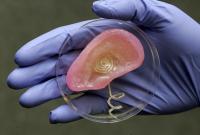
Artificial Ear

An artificial ear may soon replace a hearing aid. Scientists at Princeton University have used off-the-shelf printing tools to create a functional ear that can distinguish radio frequencies far beyond the range of normal human capability. The researchers' primary goal was to find a way to merge electronics and tissues. To create the artificial ear the scientists used a 3D printing of cells and nanoparticle and to combine a small coil antenna to the cartilage of the ear. The final product consists of a coiled antenna inside the cartilage structure and two wires that go from the base of the ear and wrap around the "cochlea," the part of the ear that senses sound, which connects to electrodes. Although there is much more time and studying needed, one scientists believes that the ear could possibly be used to restore, even, enhance human hearing. Like a hearing aid the electrical signals that are produced by the artificial ear could be connected to a patient's nerve endings, enhancing hearing. Although the current system receives radio waves, the research team plans to incorporate other material that may enable the artificial ear to register acoustic sounds. If this team succeeds who knows what we will be hearing, possibly someone's conversation in China!

Here's a link to the article- http://www.biologynews.net

N.O.S. Themes-
  • Science is collaborative: many scientists are working on this project
  • Science is based on evidence: the researchers have collected tons of data
  • Conflicts within the scientific community: that are many people with poor hearing that would like to see this ear perfected
  • Role of motivation and curiosity: the scientist would like to help all the people with bad hearing, plus they would make bank

A Cure for Epilepsy?

Scientists at UCSF have discovered a way of dramatically reducing epileptic seizures in half of the mice tested, and getting rid of seizures completely in the other half.
Here's how it works: the scientists inject a certain type of cells into the hippocampus region of the brain. During a seizure, muscles will contract forcefully, and sometimes conscience is lost. The cells that are injected into the brain make those muscles that contract be less excited, so that they won't contract. This is a one-time injection, because instead of treating the symptoms, it actually treats the problem. This procedure could eventually be used on humans, reducing the number of seizure-related injuries and deaths.

Article:  http://www.biologynews.net/archives/2013/05/05/epilepsy_cured_in_mice_using_brain_cells.html

NOS themes:
1. Science is collaborative. A team worked on this project.
2. Science is based on evidence. The way the scientists know this works is through experiments.
8. Importance of repeatability. Many mice were used, and the scientists got similar results every time.

Winged robots may shed light on fly aerobatics

Article:  http://www.sciencenews.org/view/generic/id/350138/description/Winged_robots_may_shed_light_on_fly_aerobatics

A fly.

For years, people have tried and failed to invent technology that mimics the flapping flight of birds and insects.  Last summer, Robert Wood of Harvard University and a team of his colleagues managed to create such technology.  Since then, they have refined their design and created robots that flap their wings, hover, and dart around like flies.

The "muscles" of the robotic flies are made of ceramic materials that contract when they come in contact with an electric field.  The robots are the size of a penny, are controlled by a computer, and can flap their wings 120 times per second, nearly as often as real flies.  A computer program allows them to maneuver deftly through the air. They can stay aloft for more than 20 seconds before they crash.

The robots aren't perfect.  They must constantly remain plugged in to a source of power and control.  And while a great deal of progress has been made, they still can't fly nearly as well as real flies.  The researchers are continuing their work to create a perfect fly-like flapping device.  These robots could greatly help scientists to better understand the nature of insect flight.

NOS Themes:
  • Scientific ideas are subject to change.  The robotic flies are constantly being improved upon.
  • Science is collaborative.  Robert Wood's Harvard team and other researchers are working together on the project.

3-D Simulation shows how form of complex organism evolves by natural selection.

Researchers have developed a three dimensional simulation of the evolution of morphology by integrating the mechanisms of genetic regulation that take place during embryo development. The study shows the complexity of the genetic interactions that will eventually lead to the new phenotype of the adult's organ. In the field of evolution of organisms it is nearly impossible to set up experiments, given the time requirements, so it is compensated with virtual simulation. The researchers use a theoretical model based of embryo development, where populations of individuals can mutate their genes, just as in nature. By repeating the process generation through generation, the evolution can be see in action on a computer.

The graph of the virtual evolution process: the horizontal axis is the evolution time, and the vertical axis the the population's degree of evolutionary adaptation. The picture is that of a tooth that adapts by increasing the number of tips, moving from a simple tooth to a more complex tooth.


http://current.biologyguild.com/natural-selection-evolution-complex-organs/

Nic McKenney
Hour 1

NOS themes:
Science is subject to debate and tentative
Role of skepticism
Role of motivation and curiosity

Cancer's Best Friend?


             Cancer isn’t just a deadly disease affecting humans; it’s common in dogs as well.  Twenty five percent of dogs will develop a malignant tumor, and that number keeps rising. Cancer in dogs and humans is so similar you wouldn’t be able to tell the difference between a human tumor and a dog tumor under a microscope.  Many studies are currently being done by research teams at the University of Minnesota and all over the country as well.  They are beginning to use dogs to test cancer treatments instead of rats and other animals.  At first, I thought this didn’t seem right but after reading more into the article it makes more sense.  Rats and mice don’t develop cancer tumors naturally, like dogs do, and they have to receive special treatment to weaken their immune system in order to get the cancer.  Even after they receive the cancer, their body tries to fight it off and most of the time responds well to treatment, giving false results.  According to a study done in 2005, dogs and humans have a lot of genes in common.  DNA within tumors has possibly even more commonalities.  Dogs that are being tested are treated more as patients than as lab rats; they live at home and every so often go in for a checkup. 

            Over time, as people began to breed dogs for specific characteristics, they unknowingly increased genetic triggers for cancer.  They would often breed aunts and uncles with nieces and nephews.  All this selective breeding greatly decreased the genetic diversity of the population.   While there are still many species of dogs, they are all prone to developing cancer.  Golden retrievers, in particular, have very high cancer death rates, as about half of all golden retrievers die from cancer.  As these studies continue to be done, we will hopefully be able to find more treatments to cancer that will work in both dogs and their owners.  And hopefully one day we may find a cure. 

NOS Themes:

Role of Motivation and Curiosity- Scientists are looking for new ways to treat cancer in dogs and humans

Collaborative- Many research teams across the nation are working on similar studies

Based on Evidence- All these studies are continuing to provide evidence of all the similarities of cancer between dogs and humans.  Already, some dogs have been treated and their lives have been saved or prolonged further than expected.


Brains are Tasty?

Article: http://www.sciencenews.org/view/generic/id/350107/description/Human_ancestors_had_taste_for_meat_brains

Summary: Researchers have found animal bones in Kenya which provide evidence that human ancestors living in East Africa 2 million years ago may have eaten brains of small animals. Joseph Ferraro, an anthropologist, says that eating brains could have provided the energy needed to support larger bodies. Brains helped add a side of fatty, nutrient-rich tissue to a meal. Researchers believe the gazelles they found were killed by humans because there were no other animal bites or marks.


Themes from Nature of Science:

Science is based on evidence because this is based on fossils that they found.
Role of chance - The researchers may not have been looking specifically for these types of fossils.
Role of motivation and curiosity - This topic is interesting and might lead scientists to become more curious and try to find more fossils.


Katherine Gao Hour 1 Gabel

Wednesday, May 8, 2013

Bats Take Refuge in Cold War Bunkers From Deadly Disease


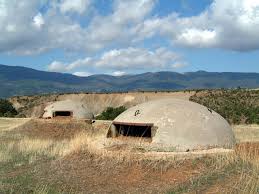
White-Nose syndrome is a fungal disease, as suggested by the name,  that grows white fuzz on the noses or wings of animals affected. Scientists believe that the disease was brought from either Europe or Asia by humans. The deadly effects of this disease was proven when biologists created an artificial colony of bats who they exposed the fungal to, and  where after a winter of hibernation, only less than a third of the entire colony survived. To tackle this problem, scientists have converted two of the 43 bunkers at the former Loring Air Force Base in Maine into a safe artificial hibernacula. The bunkers were modified by the US Fish and Wildlife Service to fit the endangered US bat species due to this deadly disease.


Article:
http://www.bbc.co.uk/news/science-environment-22354517

Nature of Science Themes:
1. Science is tentative
2. Science is testable
3. Science is collaborative


Is Spring Gone for Good?


Perpetual Winter: The Debate Over Global Warming
By Sarah Miner
Spring has finally come, but not a minute too soon. After a seemingly interminable winter, freak snowstorms in April and May have many questioning the validity of this so called “Global Warming”. Unfortunately, these people would be sadly misinformed if they thought that one cold winter could disprove something that was set in motion decades ago. The most important distinction to make here is that between climate and weather. Climate refers to weather patterns over years, eras, things that take a very long time to observe, analyze, and interpret, while weather can be something as trivial as an approaching thunderstorm or a sunny day.
This past decade has been the hottest on record since the 1880’s, when scientists started recording reliable data. Ironically enough, it has been proven that hotter atmospheric temperatures often produce droughts followed by heavy flooding. Recent natural disaster statistics are starting to reflect the change in temperature as well. In the United States, the amount of rain or snow falling in the heaviest tenth of storms has risen 20% in the last year, which is nearly three times of the increases from any previous year. Other countries have seen up to a 67% increase, which is a red flag for researchers everywhere. Although it’s hard to believe, spring officially arrives 10 days earlier than it used to, on average. Scientists have dubbed it the “Spring Creep,” and it’s not likely to reverse itself anytime soon. Everyone is encouraged to do simple things to help the environment. Little changes like using clean energy, conserving electricity, and recycling can make a big difference in the world.

Themes of Nature of Science
1.)Science is Based on Evidence: there's substantial evidence backing up this article and global warming in general.

2.)Conflicts Within the Scientific Community: Despite all of the evidence, there is still some controversy surrounding the claim that our world is heating up. Actually on second thought, those who disagree normally don't associate themselves with the scientific community, so nevermind.

3.)Role of Motivation and Curiosity: I would assume that everyone ought to be pretty motivated to learn about what's going to happen to the planet we inhabit, and I hope that people learn to take this information and do something worthwhile with it.
http://www.ucsusa.org/global_warming/science_and_impacts/science/cold-snow-climate-change.html

Thursday, April 25, 2013

Scientists Create Phantom Sensations in Non-Amputees

Summary:
File:Belgrade hand.JPG
Belgrade Hand

Neuroscientists at the Karolinska Institute in Sweden have suggested that is it possible to evoke the feeling of having a phantom limb on a healthy, normal person. Experiencing a phantom limb is a vivid sensation that the missing limb is still present. It is like imagining a body part that you do not have, or have lost. The elaborate study includes eleven different experiments and over two-hundred volunteers. The way for scientist to prove that non-amputees can experience a phantom limb is to hide the limb from the volunteers sight and to do something, like tickling, to their real limb, while also doing the same thing in the clear sight of the person. In less than a minute, the participant's brain transferred the sensation of touch, on their real limb, to the region of empty space, their phantom limb. The brain is an amazing organ, and the researchers are hoping their results will offer insight into future research on phantom pain in amputees.

NOS Themes:
  • Science is collaborative- many scientists have been working on this.
  • Science is base on evidence- the neuroscientists have collected tons of data.
  • Person's view and experience can influence data- everyone's brain is different, so they might perceive the sense of touch differently.
  • Conflicts within the scientific community- there are many people in the world that are amputees.
  • Role of motivation and curiosity- many people are very curious to see if the experience of having a phantom limb can be replicated.
Article Link: Biologynews.net

Dinosaur Egg supports Evolutionary Link Between Birds And Dinosaurs

This article is about a recent discovery that a dinosaur called Troodon laid their eggs almost vertically, resulting in only the egg bottoms to be buried in mud. Based on the researchers calculations, the eggshells were very similar to those of brooding birds, which indicates that the eggs weren't completely buried in nesting material. Both the eggs and the surrounding sediments left on the eggs support partial burial, and thus an adult dinosaur would have covered the exposed eggs during incubation. While the nesting style for the Troodon is strange, there are similarities with a bird called the Egyptian Plover. Another factor of evidence is the number of pores in the eggshell that allow respiration, and the lesser number support the fact that the egg was exposed to the open air. This particular study helps substantiate that bird like nesting behavior patterns evolved from the meat eating dinosaurs, and it evolved prior to the origin of birds. This adds to a growing collection of evidence that shows a close connection between birds and dinosaurs.


NOS themes:
Science is based on evidence
Role of credibility
Role of skepticism

http://current.biologyguild.com/birds-and-dinosaurs/

Nic McKenney, Hour 1

Autism: Written in the genes, or something else?

Students from King's College, in London, have been researching Autism Spectrum Disorder (ASD). People with ASD have a harder time with social skills, sometimes have communication impairments, and sometimes have repetitive behaviors. King's College students tried to find whether people with ASD have it in their DNA or if some environmental factor gave them the disorder while in the womb or after birth. They studied identical twins for the project. Sometimes both of the twins had it, sometimes one, sometimes neither. 70% of the time, if one twin has ASD, the other will as well, making a case for ASD being environmental, as identical twins are usually genetically the same. The researchers found that excessive amounts of the protein DNA Methylation contributes to ASD.

My brother has Asperger's, which is part of the Autism Spectrum. I hear people making fun of Asperger's and Autism in general a lot. Ha ha Asperger's it sounds funny right? No. It's not. It's offensive to make fun of people with disabilities.  Don't do it.


NoS:
1. Science is collaborative. A team of students from a college worked on this study together.
2. Science is based on evidence. There was research done on people with ASD.
8. Importance of repeatability. The research was done with 100 people, to make sure the experiments were repeatable.