Showing posts with label Gabel. Show all posts

Sunday, June 2, 2013

Decoding the Genome of the Camel

File:Camel seitlich trabend.jpg
Camelus bactianus
Summary-
Camels are one of the worlds most precious creatures in dry and arid areas. They are able to survive for weeks in hostile environments without food and water. Also, camels provide enough milk for human consumption and can be used as a source of meat. Genetic research on camels has been very difficult because the genetic code has not been fully analyzed. However, scientists have found 116,000 single nucleotide polymorphisms (SNP's) in the genetic sequence of the Bactrian camel, the two humped camel. The genetic relationship is very similar between the Bactrian and the Dromedary camel, the
single humped camel. About 85 percent of the genomic
sequences found in the Bactrian have also been discovered 
File:Camelus dromedarius in Singapore Zoo.JPG
Camelus dromedaries

in the Dromedary. Camels are very precious creatures to the Earth and a lot more research needs to
be done on them.


NOS Themes-
  • Science is collaborative- many scientists are working to decode the genome of camels
  • Science is based on evidence- an animals genome does not change and has been recorded
  • Conflicts within the scientific community- many people rely on camels to survive
  • Role of motivation and curiosity- scientist are intrigued by unraveling an animals genome

Here's a link to the Article- www.biologynews.net

Friday, May 31, 2013

Birds' Singing is an Audible Profile


     Researchers at Duke University found that a male bird's singing may show his strengths and weaknesses to potential mates. For a long time it was believed that the more songs a bird knew, the smarter it was. This experiment found that while birds with large singing repertoires excel in some areas of cognitive function, their singing ability also leaves them with deficiency in other areas. This is because while the bird is developing resources may either mostly go to the HVC, the song controlling area of the bird's brain, or the hippocampus, the part of the brain that controls spatial learning. This is important because birdsong is a good way of studying speech development.

NOS Themes:
  • Science is collaborative
  • Science is based on evidence
  • Role of chance
http://www.sciencedaily.com/releases/2013/05/130521194141.htm

Mountain Populations Offer Clues to Human Evolution

In recent studies, scientists have been researching the differences of human evolution up in mountainous regions. This, according to professor of human genetics Anna di Rienzo, is a whole different case of natural selection. These observations can supposedly be important towards the field of evolutionary biology by examining the different DNAs of people living in the mountains. 

As people transition to higher elevations, there starts to become a problem with getting enough oxygen. However, the human body does its part to attempt to adjust. According to this article, some produce higher levels of hemoglobin, which allows for greater circulation of oxygen. However, because higher levels lead to blood clot, studies have shown that living in the mountains are a lot easier for those whose ancestors have been occupying those regions for generations. 

 Studies on people of Tibet by Dr. Nielsen have shown that these adaptations in DNA have found that the gene EPAS1 was the main factor in adapting to different altitudes. However, studies in Nigeria by two other teams examined the genes of Ethiopians also living in high altitudes, and found no EPAS1 present. Instead, the gene BHLHE41 was prominenti n their DNA. It was concluded that both genes allow for humans to better cope with varying levels of altitudes. However, more work will have to be done to figure out the differences of the workings of those two genes.

 NOS Themes:


 Science is collaborative; multiple teams of scientists worked in attempt to figure out the adaptations in people's DNA


 Science is subject to debate and tentative; the two teams of scientists had conflicted findings with two different genes. It is subject to debate as to what each one will exactly do. 


Role of motivation and curiosity; scientists were interested and curious as to how different humans around the world adapt to different levels of altitude. 


http://www.nytimes.com/2013/05/30/science/mountain-populations-offer-clues-to-human-evolution.html?_r=0&adxnnl=1&adxnnlx=1370061677-WTpjaVCLsC1k9U3ayloPHA


Adrianna Tan Hour 3

New Method Discovered for Identifying Salmonella

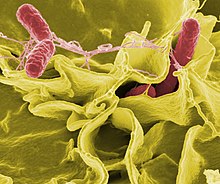
An image of salmonella,
courtesy of the Wikimedia Foundation.

                Recently, a new method of salmonella identification has been discovered which will reduce the process’s length by more than half. The standard practice, gel electrophoresis, takes several days. The new technique devised by researchers at Penn state will reduce the time to just one. This method focuses on just two genes and two other small areas of the genome, which allow for accuracy similar to that of standard electrophoresis. Considering that salmonella outbreaks need to be traced to their source as fast as possible, this breakthrough is potentially revolutionary, in terms of finding salmonella outbreaks. While salmonella only seems to kill a few hundred people a year at most, this is only because we’ve become very adept at finding and squashing the bad strains. As we become even more effective, it will only become easier to destroy them. It’s not the most extreme discovery, but it’s still a worthwhile one.

NOS Themes: 
3.) The researchers only decided that the method worked after testing it in a blind study. It will very likely have to be tested much more thoroughly before being adopted by any other institutions.
4.) This method was devised in Penn State, a relatively well-known college, by an associate professor. While this doesn't bar the individual from needing to have their work reviewed, this person is probably not making things up, as he's managed to hold his position at the university for quite awhile.

Omega-3 Fatty Acids May Help Heal a Broken Heart

 Omega-3 Fatty Acids May Help Heal a Broken Heart

This article is about new research that shows that omega-3 fatty acids may help reduce inflammation caused by heart surgery, helping the heart heal more fully and faster. The new information could help doctors treat heart disease and could be used to alter the patients diet by increasing the amount of omega-3's eaten. The research was done at  the Heart and Vascular Center at the University of California, in San Francisco, CA. Researchers tested the effect of a fatty-acid compound on cultured cells from bypass patients, and found that those with the fatty acid were much less inflamed. These results are especially promising because omega-3 supplements are already readily available in the form of fish oil.

NOS Themes:
Science is collaborative
Science is based on evidence
Role of motivation and curiosity

Article found here

Sea Urchins Destroy

Article:
  • http://www.sciencedaily.com/releases/2011/01/110114164516.htm
Similar Link:
  • http://www.reef2reef.com/forums/reef-aquarium-discussion/53447-sea-urchins-destroy-reef-building-algae-overfished-sites-kenyas-coast.html
  • lib.bioinfo.pl/news/similar/492104


An  study of Kenya's coral reefs by the University of California at Santa Cruz found that overfished reef systems have more sea urchins. Sea urchins eat coral algae that build tropical a reef. The scientist found that reefs with large numbers of sea urchins reduced the coralline algae. This species of algae allow for reef growth. The researchers found that sea urchins were the dominant grazer in the fished reefs, where the predators of sea urchins were fairly absent. These under-appreciated coralline algae are known to bind and stabilize reef skeletons and sand as well as grow small corals by providing a place for their larvae to settle. The study shows the cascading effects of predator loss on a reef.
Overall, reefs with more sea urchins grew significantly slower than ones with more complete fish communities.

NOS ThemesScience is collaborative
Science is based on evidence
Role of motivation and curiosity

Bees in the Bird Nest


A new study done by the Laboratory of Behavioral Ecology and Evolution at Seoul National University in South Korea has found that a bee’s buzz could be one factor that helps them invade and steal bird nests. Their buzz had been used previously as a warning to their predators against hunting them, as their sting could be potentially harmful. In this study, however, Piotr Jablonski and his team found that not only does the sound of this buzz warn the birds not to attack the bees; it also prompts them to leave their nests.

First, they wanted to see if the bees would try to take over the bird nests, so they created multiple nest boxes that were soon inhabited by birds. When they checked the boxes, they found that up to twenty-one percent of the boxes had been taken over by bees, while the boxes without bird nests had been left untouched. They then decided to test the effect the bee’s buzz on incubating birds. To do this, they placed a speaker under the layers of moss inside the nest box and played the sound of the buzz. They then waited for the birds to arrive, and observed their reaction with a small camera inside the box. They found that the sound of the bumblebee buzz made them nervous, and they often abandoned the nest. To provide a control, they played songs of common birds, which left them with far less stress.

They concluded “that a warning signal, known to help deter predatory attacks on a potentially harmful prey, may also help the prey to win ecological competition with its predators."

NOS Themes

·         Science is collaborative

·         Science is based on evidence

·         Role of motivation and curiosity

Flexible Feet

Our feet haven't forgotten <i>(Image: Plainpicture/Johner)</i>

A new study has found that not all feet are the rigid design that makes it better suited for walking.  Previously it was thought that humans have rigid feet and apes have more flexible feet that are better at grasping trees.  A flexible foot bends at the ball of the foot and halfway between the ball and the heel. Humans have a joint there but usually ligaments cross the joint and keep it stiff.  However, some of us have softer ligaments that allow the mid foot to bend.  

This was discovered when Jeremy DeSilva and Simone Gill from Boston University videotaped 400 people  walking around barefoot at the Boston University of Science.  They found that about 8 percent of people have some midfoot flexiblity.  An interesting part of this is that the people who had these feet were not aware of the flexibility and their gait was the same, but when a close up camera was used it was obvious that they had the flexibility.

NOS Themes:  
Role of motivation and curiosity: This is an interesting study that many people wouldn't have thought to look for.
Science is tentative: It is not yet known whether flexible feet have always been something humans have had , and if it makes walking more efficient.


Could increasing amounts of CO2 cause more foliage in plants?

For a while now scientists have suspected that all the extra CO2 in the air has been having a CO2 fertilization' effect on plants around the world. A study has been conducted from 1982 until now, monitoring arid, low foliage places around the worlds. Some places monitored have been the Southwest corner of North America, parts of the Middle East and Africa, and the Australian Outback. When plants photosynthesize, they use up carbon dioxide and are able to retain more water within themselves. The more water a plant has available for itself, the more leaves it is able to grow. Plants are able to photosynthesize more if they have more available atmospheric carbon dioxide. So with those facts one can reason that If a plant has more Co2 available, it will photosynthesize more; If a plant photosynthesizes more, it will have more water available to itself; If a plant has more water to itself, it will grow more leaves. Seems fairly logical, right? Utilizing satellite imagery, the previously mentioned areas have been monitored over the years and the amount of green in these areas is continually increasing. Many things affect how much foliage a plant will produce, but in these areas the only factor to be really changing is the increasing amount of CO2. So other possibilities of increase in foliage such as, more rain, can be deducted. So this seeming trend of increasing green with the increasing CO2 could eventually very well transform landscapes and ecosystems over time and bring evolution of organisms in a new direction.


Original article:
 http://www.sciencedaily.com/releases/2013/05/130531105415.htm


Themes of science:
-science is collaborative (it takes several teams of scientists and organizations to conduct such a study)
-science is based on evidence (experiments were conducted)
-science is subject to debate and tentative (even though closely examined, other factors can still affect the outcome of the experiment, and some may argue the results because of this)

Responses to Infections Depend on Time of Day

Link to Article: http://www.sciencenews.org/view/generic/id/350677/description/Response_to_bacterial_infection_depends_on_time_of_day

download

Scientists at the University of California gave salmonella to mice at either 10Am or 10PM.  The mice that were given salmonella at 10PM fared much better than the mice that were given salmonella at 10AM.  Scientists already knew that this happened in fruit flies, but this was the first evidence of it occurring in mammals.  It is known that most organisms use molecular timekeepers called circadian clocks to set daily rhythms. In mammals, a main clock in the brain corresponds with clocks throughout their tissues and organs.  These scientists were able to genetically engineer the mice to get rid of this molecular clock.  They then repeated the same experiment as before.  This time their results showed that both time groups had similar reactions from the Salmonella.  This information could be useful to humans because it might be more useful to give antibiotics at a certain time in the day to be most effective at fighting the infection.

NOS Themes:
Science is Based on Evidence- The scientists tested this with many mice to make sure that their results were accurate.
Science is Collaborative- There were many scientists that worked on this project that help to get these results.

Mitchell Gardner Hour:2

How do Plants Grow Toward the Light

Link:


Summary:

The growth of plants toward light begins early in their lifecycle.  The seeds germinate in the soil and grow upward against gravity. This is an initial clue for orientation.  The seeds also contain highly sensitive, light-sensing proteins.  These help the plant find the shortest route out to the sun.  They even bend in the direction of the sunlight.  Plants are able to bend towards the light by elongating the cells of the stem on the side that is the farthest from the light.  This is called phototropism.

The substance responsible for the elongation of the cells is auxin.  Auxin is a phytohormone that is formed in cells at the tip of the shoot.  It is then passed from cell to cell.  Export and import proteins push the auxin out of the first cell into intercellular space and then into the next cell until the auxin reaches the target site.  the most important export proteins are called PINs.  These regulate the direction of the auxin flow.  In order to function, PINs require the signal of D6PK protein kinase.  The D6KP modify PINs by transferring phosphate groups.

Themes of Nature of Science:
  • Science is collaborative
  • Science is based on evidence
  • Science is subject to debate and tentative

Thursday, May 30, 2013

SARS 2.0

Recently, a new virus called MERS, similar to SARS, has been spreading from the Middle East. Just like SARS, it is a coronavirus and it isn't known exactly how it spreads. Already twenty seven out of the forty nine people who have been infected have died and scientists have not yet found a cure for this virus. It is spread by human to human contact and from behaviors such as coughing and sneezing. The virus itself causes respiratory problems, kidney failure, pneumonia, and gastrointestinal problems. Like seventy five percent of emerging diseases, this virus originated from an animal, the bat, and because of the unstable pool of microbes, new infectious agents are produced.

http://news.nationalgeographic.com/news/2013/05/130530-mers-cov-virus-nathan-wolfe-pandemic/


NOS Themes
-Science is based on motivation. Scientists do not know yet how to cure this disease and because of the high death rate, are motivated to find a solution.
-Science is collaborative. Many organizations such as the U.S. Agency for International Development's Emerging Pandemic Threats Program and the U.S. Department of Defense's Cooperative Biological Engagement Program. 
-Science is tentative. There isn't a lot known about this virus yet and hopefully, this will change soon.

Carnivorous Plant Throws out 'Junk' DNA

junk DNA
Genes make up a measly 2% of the human genome, the other bits consist of a material called noncoding DNA, which has puzzled many scientists over many years. This study offers a new insight, that a large majority of noncoding DNA may not actually be required for complex life. This study was done on the genome of the carnivorous bladderwort plant. The researchers report they found it's DNA to be 97% genes, with only 3% of the junk DNA. The Bladderwort has been deleting noncoding DNA from its genome over many generations, and yet it is still a complex organism. It lives in freshwater wetlands, and has developed a complex hunting method. To capture it's prey, it pumps water from tiny chambers turning each into a vacuum that sucks in and traps unsuspecting critters. The genome only has 80 million base pairs, compared to a tomato's 780 million, and yet they have a similar number of genes.

Nature of Science themes
Science is based on evidence
Science is subject to debate and tentative
Role of credibility
role of chance

http://current.biologyguild.com/carnivorous-plant-throws-out-junk-dna/
Nic McKenney - Hour 1

A Trip To Mars?

Article: http://news.nationalgeographic.com/news/2013/05/130530-mars-space-astronaut-radiation-science/

Summary: Recent results from radiation assessments on Mars show that keeping astronauts safe from hazardous radiation if and when they travel to and from Mars will not be easy. Readings from the Radiation Assessment Detector on the Curiosity rover show that astronauts would receive significant doses of high-energy galactic cosmic rays on Mars. Scientists say that the results are not surprising, but it is the first time that there is real data that shows just how much radiation travelers would get from the flight there alone. The amount of radiation received would be comparable to getting a whole-body CT scan once every five or six days for the entire trip. However, even with the threat of these galactic cosmic rays, NASA officials said that it did not make the goal of sending astronauts to Mars by the mid-2030s impossible. The best way to reduce the risk of cosmic radiation would be to lower the time it takes to get to Mars. NASA has been experimenting with ways to make the spaceships go faster. Hopefully people will be able to create a solution to the radiation so that people can go to Mars soon!


Themes of Science:

1. Science is based on evidence - Researchers used evidence from the RAD aboard the Curiosity rover.
2. Science is collaborative - Both researchers and NASA and independent researchers such as Dennis Tito are looking for ways to solve this problem with radiation.
3. Role of motivation and curiosity - People are motivated by the prospect of going to Mars.
4. Role of credibility - The rover is credible because it actually went to Mars and measured the Radiation and the new views on whether or not we will be able to make it to Mars by the mid-2030s are more credible because there is now data from the RAD.


Katherine Gao Hour 1 Gabel

Tuesday, May 28, 2013

A Tropical Arctic


            When you think of the Artic do you think of lush trees and warm summers?  According to researchers at the University of Massachusetts Amherst, the Artic was once covered in forests and its summers were 8 degrees Celsius warmer than today’s temperatures.  They discovered sediments buried beneath Lake El’gygytygn (pronounced EL-gih-git-gin) in Russia.  These sediments come from the Pliocene epoch.  During that period of time, the carbon dioxide concentration in Earth’s atmosphere was almost 400 parts per million.  Today, the Earth is close to approaching that, and the events that happened in the Pliocene era could be a good predictor for what could happen in Earth’s future.

            According to the research done, 3.6 million years ago the Artic was three times as wet as it is today and its average summer temperatures were 15 degrees Celsius.  Over time, the temperatures cooled down but still remained a few degrees warmer than they are today.  Even during periods where the Artic should’ve been cold and frigid, warm summers prevailed.  This shows that Earth’s constant changing between glacial periods is more complicated than scientists originally thought.  Also, the Artic had little to no ice year round.  If these events are a good predictor for the future what will happen to the animals that have evolved to survive using the sea ice?

Nature Of Science Themes:

·         Based on Evidence: The researchers found physical evidence of the warm Artic climate

·         Collaborative: A team of researchers from the University of Massachusetts Amherst worked together on this project


Monday, May 27, 2013

Gene Discovered for Babies Born with Hole in the Heart

British Heart Foundation (BHF) Professor Bernard Keavney, from The University of Manchester and Newcastle University, led the research which saw investigators from Newcastle, Nottingham, Oxford and Leicester universities in the UK, together with colleagues in Europe, Australia and Canada pool resources to discover a gene in babies born with a hole in the heart. Congenital Heart Disease (CHD) is the most common form of congenital malformation, occuring in 7 in 100 babies and is one of the major causes of childhood death and illness. In around 20% of cases, a predisposing cause can be identified, but for the rest of the patients, scientists couldn't identify the genes. The scientists looked at over 2,000 CHD patients and measured over 500,000 genetic markers which vary in the general population and compared those makers in the patients to those of people in good health. 

They found that a common genetic variation near a gene called MSx1 was strongly associated with the risk of Atrial Septal Defect (hole in the heart). It is estimated that 10% of ASD cases may be due to the MSx1 gene. Researcher could not find a genetic marker that was common in all types of CHD though but Professor Keavney is optimistic that further research and conducting larger studies will lead them to find genes that cause other types of CHD and that the studies may help them give better genetic counselling to high risk families. 


NOS Themes:


  • Science is Collaborative
  • The Role of Curiosity
  • Science is tentative
  • Science is based on evidence
  • Science is experimental
Article

Related Article

Thursday, May 9, 2013

Sleepy Primates

    Researchers found that dwarf lemurs aren't the only primates that hibernate. Two other lemurs,Crossley's dwarf lemur and Sibree's dwarf lemur, have been found to also hibernate. Scientists say these primates hibernate differently from other hibernating animals. Scientists are still unsure of what causes hibernation.

NOS Themes:
  • Science is collabarative
  • Science is based on evidence
  • Role of motivation and curiosity
http://www.scienceagogo.com/news/20130405194027data_trunc_sys.shtml

Laughter Connections

The article "Tickling Laughter Produces Different Brain Response To Social Laughter" is about a study recently conducted in Germany.  18 subjects listened to different types of laughter:  joyous, taunting, and tickling laughter.  They used a functional magnetic resonance imaging (fMRI) to look at brain patterns that occur.  Joyous and taunting laughter, also called "complex social laughter", activated the same part of the brain,  the part that is linked to processing social information.  However, tickling laughter activated parts of the brain associated with processing acoustic complexity. 
This means that tickling laughter probably creates more complex sounds than other laughter. 

NOS themes:  Science is based on evidence,  the fMRI shows the parts of the brain being used.  
role of Motivation and curiosity:  This may be the first investigation to look at nonverbal vocal cues

http://www.medicalnewstoday.com/articles/260345.php


Printable 'Bionic' Ear Melds Electronics and Biology

Summary-
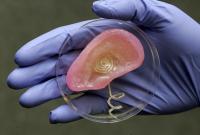
Artificial Ear

An artificial ear may soon replace a hearing aid. Scientists at Princeton University have used off-the-shelf printing tools to create a functional ear that can distinguish radio frequencies far beyond the range of normal human capability. The researchers' primary goal was to find a way to merge electronics and tissues. To create the artificial ear the scientists used a 3D printing of cells and nanoparticle and to combine a small coil antenna to the cartilage of the ear. The final product consists of a coiled antenna inside the cartilage structure and two wires that go from the base of the ear and wrap around the "cochlea," the part of the ear that senses sound, which connects to electrodes. Although there is much more time and studying needed, one scientists believes that the ear could possibly be used to restore, even, enhance human hearing. Like a hearing aid the electrical signals that are produced by the artificial ear could be connected to a patient's nerve endings, enhancing hearing. Although the current system receives radio waves, the research team plans to incorporate other material that may enable the artificial ear to register acoustic sounds. If this team succeeds who knows what we will be hearing, possibly someone's conversation in China!

Here's a link to the article- http://www.biologynews.net

N.O.S. Themes-
  • Science is collaborative: many scientists are working on this project
  • Science is based on evidence: the researchers have collected tons of data
  • Conflicts within the scientific community: that are many people with poor hearing that would like to see this ear perfected
  • Role of motivation and curiosity: the scientist would like to help all the people with bad hearing, plus they would make bank

Biosensor That Detects Antibiotic Resistance Brings Us One Step Closer to Fighting Superbugs

Biosensor That Detects Antibiotic Resistance Brings Us One Step Closer to Fighting Superbugs


This article is about a group of researchers at Auburn University and the Keelser Air Force Base who have developed a new biosensor that can detect antibiotic resistance in bacteria very quickly, in under 10 minutes. The biosensor works by using bacteriophage viruses combined with antibodies that indicate antibiotic resistance. The viruses do not affect humans, but they kill the bacteria. The scientists specifically worked with staphylococcus, which has a superbug strain that is resistant to antibiotics. Recently, antibiotic resistant bacteria, also knows as 'superbugs', have led to more deaths in the US than AIDS. The research team hopes that this valuable research will help create anti-microbial surfaces that will destroy the bacteria. 

NOS Themes:
Science is based on evidence
Science is collaborative
Importance of repeatability
Role of motivation and curiosity

Article Found Here