Showing posts with label Hour 3. Show all posts

Sunday, June 2, 2013

The Science of Sniffing Out Liars


Lying has become a common human behavior but it turns out humans are surprisingly inconsistent when it comes to separating the truth from the false. Signals that are thought to expose a liar are either too subtle to notice or are simply not there. A professor at Texas Christian University in Fort Worth, and Bella DePaulo, a visiting professor of social psychology at the University of California, Santa Barbara, found that observers, like you and I, are correct only 54 percent of the time when trying to distinguish between true and false statements. If you leave judgments up to chance, people are no better or worst are trying to figure out lies. They say the reason is that humans don't generally know what to look for. After research they found that,  "The whole past of lie detection has been reconceptualized from paying close attention to a person's behavior to a more active and interactive task." The research is still cultivating but I think it will be interesting to find out how we can detect liars without looking at just their behavior. That way there is no biased opinions.


NOS Themes:

  • Science is role of curiosity: Scientists are trying to answer a question that motivated them to research
  • Science is collaborative: Scientists from many universities are researching this topic

Link to Article:

Friday, May 31, 2013

Mountain Populations Offer Clues to Human Evolution

In recent studies, scientists have been researching the differences of human evolution up in mountainous regions. This, according to professor of human genetics Anna di Rienzo, is a whole different case of natural selection. These observations can supposedly be important towards the field of evolutionary biology by examining the different DNAs of people living in the mountains. 

As people transition to higher elevations, there starts to become a problem with getting enough oxygen. However, the human body does its part to attempt to adjust. According to this article, some produce higher levels of hemoglobin, which allows for greater circulation of oxygen. However, because higher levels lead to blood clot, studies have shown that living in the mountains are a lot easier for those whose ancestors have been occupying those regions for generations. 

 Studies on people of Tibet by Dr. Nielsen have shown that these adaptations in DNA have found that the gene EPAS1 was the main factor in adapting to different altitudes. However, studies in Nigeria by two other teams examined the genes of Ethiopians also living in high altitudes, and found no EPAS1 present. Instead, the gene BHLHE41 was prominenti n their DNA. It was concluded that both genes allow for humans to better cope with varying levels of altitudes. However, more work will have to be done to figure out the differences of the workings of those two genes.

 NOS Themes:


 Science is collaborative; multiple teams of scientists worked in attempt to figure out the adaptations in people's DNA


 Science is subject to debate and tentative; the two teams of scientists had conflicted findings with two different genes. It is subject to debate as to what each one will exactly do. 


Role of motivation and curiosity; scientists were interested and curious as to how different humans around the world adapt to different levels of altitude. 


http://www.nytimes.com/2013/05/30/science/mountain-populations-offer-clues-to-human-evolution.html?_r=0&adxnnl=1&adxnnlx=1370061677-WTpjaVCLsC1k9U3ayloPHA


Adrianna Tan Hour 3

New Method Discovered for Identifying Salmonella

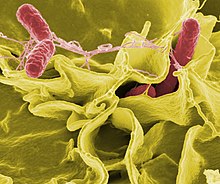
An image of salmonella,
courtesy of the Wikimedia Foundation.

                Recently, a new method of salmonella identification has been discovered which will reduce the process’s length by more than half. The standard practice, gel electrophoresis, takes several days. The new technique devised by researchers at Penn state will reduce the time to just one. This method focuses on just two genes and two other small areas of the genome, which allow for accuracy similar to that of standard electrophoresis. Considering that salmonella outbreaks need to be traced to their source as fast as possible, this breakthrough is potentially revolutionary, in terms of finding salmonella outbreaks. While salmonella only seems to kill a few hundred people a year at most, this is only because we’ve become very adept at finding and squashing the bad strains. As we become even more effective, it will only become easier to destroy them. It’s not the most extreme discovery, but it’s still a worthwhile one.

NOS Themes: 
3.) The researchers only decided that the method worked after testing it in a blind study. It will very likely have to be tested much more thoroughly before being adopted by any other institutions.
4.) This method was devised in Penn State, a relatively well-known college, by an associate professor. While this doesn't bar the individual from needing to have their work reviewed, this person is probably not making things up, as he's managed to hold his position at the university for quite awhile.

Omega-3 Fatty Acids May Help Heal a Broken Heart

 Omega-3 Fatty Acids May Help Heal a Broken Heart

This article is about new research that shows that omega-3 fatty acids may help reduce inflammation caused by heart surgery, helping the heart heal more fully and faster. The new information could help doctors treat heart disease and could be used to alter the patients diet by increasing the amount of omega-3's eaten. The research was done at  the Heart and Vascular Center at the University of California, in San Francisco, CA. Researchers tested the effect of a fatty-acid compound on cultured cells from bypass patients, and found that those with the fatty acid were much less inflamed. These results are especially promising because omega-3 supplements are already readily available in the form of fish oil.

NOS Themes:
Science is collaborative
Science is based on evidence
Role of motivation and curiosity

Article found here

Sea Urchins Destroy

Article:
  • http://www.sciencedaily.com/releases/2011/01/110114164516.htm
Similar Link:
  • http://www.reef2reef.com/forums/reef-aquarium-discussion/53447-sea-urchins-destroy-reef-building-algae-overfished-sites-kenyas-coast.html
  • lib.bioinfo.pl/news/similar/492104


An  study of Kenya's coral reefs by the University of California at Santa Cruz found that overfished reef systems have more sea urchins. Sea urchins eat coral algae that build tropical a reef. The scientist found that reefs with large numbers of sea urchins reduced the coralline algae. This species of algae allow for reef growth. The researchers found that sea urchins were the dominant grazer in the fished reefs, where the predators of sea urchins were fairly absent. These under-appreciated coralline algae are known to bind and stabilize reef skeletons and sand as well as grow small corals by providing a place for their larvae to settle. The study shows the cascading effects of predator loss on a reef.
Overall, reefs with more sea urchins grew significantly slower than ones with more complete fish communities.

NOS ThemesScience is collaborative
Science is based on evidence
Role of motivation and curiosity

Bees in the Bird Nest


A new study done by the Laboratory of Behavioral Ecology and Evolution at Seoul National University in South Korea has found that a bee’s buzz could be one factor that helps them invade and steal bird nests. Their buzz had been used previously as a warning to their predators against hunting them, as their sting could be potentially harmful. In this study, however, Piotr Jablonski and his team found that not only does the sound of this buzz warn the birds not to attack the bees; it also prompts them to leave their nests.

First, they wanted to see if the bees would try to take over the bird nests, so they created multiple nest boxes that were soon inhabited by birds. When they checked the boxes, they found that up to twenty-one percent of the boxes had been taken over by bees, while the boxes without bird nests had been left untouched. They then decided to test the effect the bee’s buzz on incubating birds. To do this, they placed a speaker under the layers of moss inside the nest box and played the sound of the buzz. They then waited for the birds to arrive, and observed their reaction with a small camera inside the box. They found that the sound of the bumblebee buzz made them nervous, and they often abandoned the nest. To provide a control, they played songs of common birds, which left them with far less stress.

They concluded “that a warning signal, known to help deter predatory attacks on a potentially harmful prey, may also help the prey to win ecological competition with its predators."

NOS Themes

·         Science is collaborative

·         Science is based on evidence

·         Role of motivation and curiosity

Could increasing amounts of CO2 cause more foliage in plants?

For a while now scientists have suspected that all the extra CO2 in the air has been having a CO2 fertilization' effect on plants around the world. A study has been conducted from 1982 until now, monitoring arid, low foliage places around the worlds. Some places monitored have been the Southwest corner of North America, parts of the Middle East and Africa, and the Australian Outback. When plants photosynthesize, they use up carbon dioxide and are able to retain more water within themselves. The more water a plant has available for itself, the more leaves it is able to grow. Plants are able to photosynthesize more if they have more available atmospheric carbon dioxide. So with those facts one can reason that If a plant has more Co2 available, it will photosynthesize more; If a plant photosynthesizes more, it will have more water available to itself; If a plant has more water to itself, it will grow more leaves. Seems fairly logical, right? Utilizing satellite imagery, the previously mentioned areas have been monitored over the years and the amount of green in these areas is continually increasing. Many things affect how much foliage a plant will produce, but in these areas the only factor to be really changing is the increasing amount of CO2. So other possibilities of increase in foliage such as, more rain, can be deducted. So this seeming trend of increasing green with the increasing CO2 could eventually very well transform landscapes and ecosystems over time and bring evolution of organisms in a new direction.


Original article:
 http://www.sciencedaily.com/releases/2013/05/130531105415.htm


Themes of science:
-science is collaborative (it takes several teams of scientists and organizations to conduct such a study)
-science is based on evidence (experiments were conducted)
-science is subject to debate and tentative (even though closely examined, other factors can still affect the outcome of the experiment, and some may argue the results because of this)

Genes determining academic attainment

http://www.sciencedaily.com/releases/2013/05/130530141959.htm


There was recently a study to see if DNA had any correlation to the level of education attained by an individual. They studied a group of 125,000 individuals, where most studies in the past on this topic had used less than 10,000 people. These people came from different countries, meaning that an international standard for academic attainment was necessary to use. The study analyzed single nucleotide polymorphisms. In other studies, it was determined that the SNP with the greatest effect on height accounted for a .4% variation in humans. Their data showed that the the SNP had only a .02% effect on educational attainment. This shows that it is much more dependent upon other factors than DNA how far one goes into their education. The scientists said that this was just the beginning of the research into how other factors effect educational attainment.

NOS Themes:
Collaboration- large group of scientists from universities around the world
Curiosity- people want to know if they are "destined" to go far in life

New 1 Step Process for Designer Bacteria


Picture Source:
http://www.unc.edu/depts/our/hhmi/hhmi-ft_learning_modules/proteinsmodule/images/coloredecoli.png

Article Link:
http://www.biologynews.net/archives/2013/05/28/new_1step_process_for_designer_bacteria.html

          University of Adelaide researchers have developed a simpler and faster way of developing designer bacteria. This new genetic engineering process called 'clonetegration'. Designer bacteria is a bacterium that has been modified to perform a specific task. These designer bacteria are used for theraputic drug development, such as insulin and other biotechnology products. Designer bacteria are produced by integrating extra pieces of genetic material into the DNA of bacteria. In the experiment at the University of Adelaide E. Coli. This produces the desired product.
         An example of this process is the new genes are inserted into the bacteria's chromosome so that they produce compounds or proteins not normally produced. Insulin is produced in this way. This process now only takes one night compared to the original several days. As well as the process being sped up, this process enables multiple rounds of genetic engineering on the same bacteria. "This will become a valuable technique for facilitation genetic engineering with sequences that are difficult to clone as well as enable the rapid construction of synthetic biological systems," Dr. Shearwin says.
          I think that this will become a very valuable process. This is because a short term situation can be fixed very quickly. In case a new problem arises or develops on a large scale, the crises will be able to be taken care of more quickly. 

NOS Themes: 
  • Science is based on evidence- The researchers have produced their article after performing extensive research to base their findings on.
  • Role of motivation and curiosity- The researchers were interested in finding a faster way to produce this genetically engineered bacteria.

Here are some other links to check out:
http://www.nature.com/nchembio/journal/v6/n6/full/nchembio.378.html 
http://www.utexas.edu/news/2013/01/15/designer-bacteria-may-lead-to-better-vaccines/

Thursday, May 30, 2013

A Dinosaur With Table Manners.

Allosaurus
Recent studies of 150-million-year-old bones of an Allosaurus have shown that its eating habits are a lot more 'polite' and deliberate than its T-Rex cousin.

Using a method called multibody dynamic, researchers simulated the creature neck and muscle movements.
The result of this showed that the Allosaurus moved much like the common day bird. Allosaurus most likely drove its teeth into its prey to catch it, much like a falcon, and then ate by pulling flesh up. Its cousin, the T-Rex, on the other hand, thrashed the prey side to side.

This study is part of an ongoing project, 'the visible interactive dinosaur project,' to find the answers of the way dinosaurs ate.

NOS:
1. Science is based on evidence.- conclusion based on data gathered by testing through the program
2. Role of motivation and curiosity.
3. Role of chance-it was believed that Allosaurus ate the same was as a T-Rex
4. Importance of repeatably.- anyone with the same program and resources can test this.

This Article: Allosaurus Neck Muscles Hint at Good Table Manners

More Articles like this:
http://mrogren.wikispaces.com/The+Visible+Interactive+Dinosaur+Project
http://www.sciencedaily.com/releases/2013/04/130422111230.htm


Apes Have Emotions Too

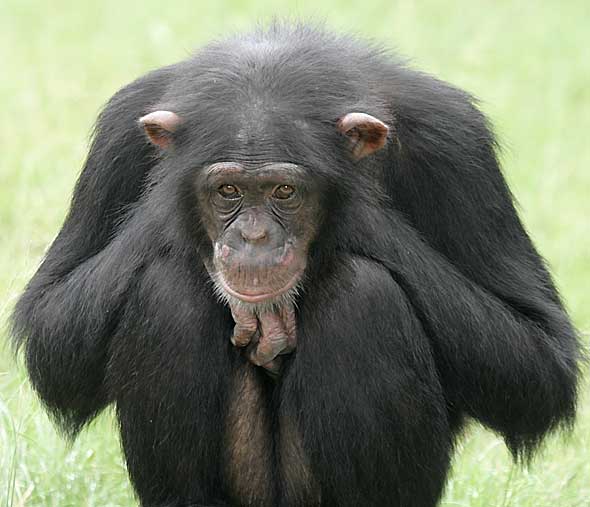
Like humans, certain apes can show signs of emotion, such as joy or frustration, when performing a task. A group of scientists got to this conclusion by conducting 2 experiements with chimpanzees and bonobos. One experiment was that they had to make choices about whether to get larger rewrds and the other was whether to take the chance to get a good treat, but risk getting a not as good treat if their choice was not a good one. Out of the 2 apes, chimpanzees were more patient and likely to take risks, but both apes responded with many emotions similar to humans if they got what they wanted or didn't. When the apes got the not as good treat, they responded negatively by banging, making noises, and showing signs of pouting like a human child would do. If they didn't get what they wanted in the risky choice experiment, they would try to switch their choice after realizing they made the wrong one, but never did this when they made the right choice to get the good treat. These apes showed motivational and emotional repsonse to these experiments and the scientists concluded that apes do indeed have emotional responses to decision making, but they would need more research to see if these emotions can change future choices the apes make.

NOS Themes:

Role of motivation and curiosity: These scientists were curious if apes have similar motivations and emotions when it comes to making decisions.
Science if based on evidence: The scientists conducted an experiment where they got good results an the apes' behavior.


Article: http://www.sciencedaily.com/releases/2013/05/130529190933.htm

Schizophrenia Cured in Mice

Scientists from the Medical College of Georgia at Georgia Regents University have been doing experiments on mice relating to schizophrenia. The scientists genetically engineered mice so that they could change the levels of neuregulin-1 in the mice. They put high levels of neuregulin-1 in mice to imitate the levels found in schizophrenic patients. Through this they have found that the mice with high levels of neuregulin-1 exhibited symptoms of schizophrenia. When the levels were returned to normal, the symptoms disappeared. This confirms that high levels of neuregulin-1 is the cause of schizophrenia and can be treated by bringing down the levels. This works in mice, but scientists aren't so sure if it'll work for humans. And only a minority of schizophrenic patients have high neuregulin-1 levels. Also, to even lower the levels would require small molecules that could block the gene's signaling pathways. Thus, as of now, schizophrenia still doesn't have a cure, but scientists believe that these discoveries will help the development of a cure.

Link to article: http://www.sciencedaily.com/releases/2013/05/130522123143.htm

NOS Themes:
  • Science is collaborative: Many scientists worked together to uncover these discoveries.
  • Science is based on evidence: The scientists didn't publish their findings until they were sure that there was evidence to back up their claims.
  • Role of chance: The scientists tested many mice to make sure that the results didn't happen by chance.

Crystal Chang
Hour 3

Language is in our Biology

A good working memory is possibly the brain's most important system when it comes to learning a new language. Memory now appears to be first and foremost determined by our genes. This was tested on approximately one hundred 10 year old elementary students in Norway by Mila Vulchanova, a professor at NTNU's Department of Modern Foreign Languages. "Our results show a clear statistical correlation between a high level of language competence and a good working memory in the students we tested," she says. The 10 year olds came from both rural schooling and urban schooling, but all had Norwegian as their first language. They were tested on their Norwegian and English language skills as well as working memory skills. All tests were administered orally to prevent affected test results from the variation of literacy skills.

These results contradict some conventional assumptions that children acquire languages regardless of cogitive abilities, like perception, spatial understanding, and working memory. Memory affects the ability to gather information like new words or grammatical concepts and put it together. Also, Vulchanova found that competence in one's native tongue correlates highly with skills in a foreign language. There is a link between language development and the capacity of our working memory.


NOS Themes:
  • science is based on evidence
  • science is subject to debate
  • role of motivation
http://www.sciencedaily.com/releases/2013/05/130527100432.htm

Monday, May 27, 2013

Gene Discovered for Babies Born with Hole in the Heart

British Heart Foundation (BHF) Professor Bernard Keavney, from The University of Manchester and Newcastle University, led the research which saw investigators from Newcastle, Nottingham, Oxford and Leicester universities in the UK, together with colleagues in Europe, Australia and Canada pool resources to discover a gene in babies born with a hole in the heart. Congenital Heart Disease (CHD) is the most common form of congenital malformation, occuring in 7 in 100 babies and is one of the major causes of childhood death and illness. In around 20% of cases, a predisposing cause can be identified, but for the rest of the patients, scientists couldn't identify the genes. The scientists looked at over 2,000 CHD patients and measured over 500,000 genetic markers which vary in the general population and compared those makers in the patients to those of people in good health. 

They found that a common genetic variation near a gene called MSx1 was strongly associated with the risk of Atrial Septal Defect (hole in the heart). It is estimated that 10% of ASD cases may be due to the MSx1 gene. Researcher could not find a genetic marker that was common in all types of CHD though but Professor Keavney is optimistic that further research and conducting larger studies will lead them to find genes that cause other types of CHD and that the studies may help them give better genetic counselling to high risk families. 


NOS Themes:


  • Science is Collaborative
  • The Role of Curiosity
  • Science is tentative
  • Science is based on evidence
  • Science is experimental
Article

Related Article

Wednesday, May 22, 2013

New and Improved HIV Antibodies

Summary:
          A team of NIH scientists has developed a new tool to identify neutralizing antibodies (bNAbs) that can prevent infections from many different strains of HIV found around the globe. This new invention is the advance that could help speed HIV vaccine research. It was not until now that available methods for analyzing blood samples began to easily yield specific information about the HIV antibodies or the parts of the virus they targeted. 
          The new tool lets scientists determine the HIV bNAbs present in a certain blood sample by analyzing the neutralized HIV strains in it. The process is called neutralization fingerprinting and is a mathematical algorithm that carries out data on HIV bNAbs generated in recent years. The neutralization fingerprint of an HIV antibody is a measurement of which virus strains it can block and with what intensity. And because blood samples contain mixtures of antibodies, the algorithm calculates the specific types of HIV bNAbs present and the proportion of each by comparing the blood's neutralization data with the fingerprints of known HIV bNAbs. 
          Neutralization fingerprinting is significantly faster than older analytic methods. According to the researchers who developed the new tool, the same approach could be used to study human responses to other pathogens, such as influenza and hepatitis C viruses.  
        
NOS Themes:
  • Role of motivation or curiosity- The team of scientists were motivated to find good antibodies to fight off HIV because many people are dying of AIDS each year.
  • Conflicts within the scientific community- Until now, available methods for analyzing blood samples have not shown the specific information that scientists are looking for to make effective antibodies, so they have not been successfully in "curing" HIV and AIDS.
  • Science is collaborative- The team of NIH scientists worked together to create  new tool that efficiently identifies neutralizing antibodies that can fight off HIV.
Article Link:
http://www.biologynews.net/archives/2013/05/11/nih_scientists_create_new_tool_for_identifying_powerful_hiv_antibodies.html

Related Articles:
  • http://www.biologynews.net/archives/2008/01/12/uncovering_the_achilles_heel_of_the_hiv1_envelope.html
  • http://www.biologynews.net/archives/2010/08/03/nonhuman_primate_study_generates_information_relevant_to_hiv1_vaccine_strategies.html
  • http://www.biologynews.net/archives/2009/09/03/2_new_antibodies_found_to_cripple_hiv.html
Created by Michelle Chang

Thursday, May 9, 2013

Biosensor That Detects Antibiotic Resistance Brings Us One Step Closer to Fighting Superbugs

Biosensor That Detects Antibiotic Resistance Brings Us One Step Closer to Fighting Superbugs


This article is about a group of researchers at Auburn University and the Keelser Air Force Base who have developed a new biosensor that can detect antibiotic resistance in bacteria very quickly, in under 10 minutes. The biosensor works by using bacteriophage viruses combined with antibodies that indicate antibiotic resistance. The viruses do not affect humans, but they kill the bacteria. The scientists specifically worked with staphylococcus, which has a superbug strain that is resistant to antibiotics. Recently, antibiotic resistant bacteria, also knows as 'superbugs', have led to more deaths in the US than AIDS. The research team hopes that this valuable research will help create anti-microbial surfaces that will destroy the bacteria. 

NOS Themes:
Science is based on evidence
Science is collaborative
Importance of repeatability
Role of motivation and curiosity

Article Found Here 


Anti-Venoms with less Side Effects

Scientist in Brazil have discovered a protein in the toxin of a deadly spider known as the reaper spider (aka brown spider). The protein could allow easier manufacturing of anti-venoms while also reducing side effects. "Existing anit-venoms are made of pure toxins and can be harmful to people who take them" says Carlos Chávez-Olortgui, one of the researchers. They tested their serum on lab animals which caused a reaction and kept them from the harm of the spider's venom.They also used their anti-venom on the toxins from two different spiders who had similar venoms. The serum stopped both of them. This showed that a single type of anti-poison can work on multiple kinds of venoms. Using this information, scientists around the world will be able to work and better serums for all venoms.
- Carlos Chávez-Olortgui

Article:http://www.medicalnewstoday.com/articles/260296.php
.

Adults Lack Stem Cells for Making New Eggs


Picture Source:
http://images.tutorvista.com/content/reproduction-in-animals/human-ovum-structure.jpeg

Article Link:
http://www.biologynews.net/archives/2013/04/29/adults_lack_stem_cells_for_making_new_eggs.html

Human and mouse ovaries both contain a big supply of germ cells before birth. Some of these will develop into eggs that will be released from follicles during ovulation. It has long been believed that there is a fixed supply of follicles after birth, leading to menopause when they run out. Researchers within the last decade have questioned this finding. Claims have now been made that the follicle pool is constantly resupplied. The scientists used a tracking technique to follow individual cells within a living animal over time. Their findings showed that follicles are very stable and stem cell activity cannot be detected. One stem cell division every two weeks was detected in the mice, but that was not a significant level. According to Spradling, the scientist researching this topic, "the same safety and reliability concerns would apply as to any laboratory-generates cell type that lacks a normal counterpart in the body."

I always thought that women were born with as many eggs as they would have for the rest of their life. From these findings, it is shown that this is mostly true, although new eggs are slowly being remanufacture in the body. Similar to any other mammalian females, humans have the ability to release one egg each month, which will never be gained back in the count.

NOS Themes:
  • Science is based on evidence- the findings in the mice helped the researchers develop a conclusion about the topic
  • Importance of repeatability- It is important to repeat this experiment to make sure that the findings would be consistent
  • Role of chance- It is possible that one mouse may differ from another in the timing that this egg production takes place


HERB the robot

Researchers at Carnegie Mellon University are working with a robot they call "HERB" to create a form of artificial intelligence. HERB has a color image and depth sensor as well as two mechanical arms. The current goal of the project is object recognition and manipulation. HERB uses the information from its sensors to guess what objects are of use to its task (learning how to identify and manipulate objects). Currently HERB's definition of an object is something that can be picked up. This is not true artificial intelligence but rather a program that collects data about its environment and explores.


Article:
 http://www.sciencedaily.com/releases/2013/05/130506114003.htm

"HERB eye view"
http://www.youtube.com/watch?v=krHCCDj-fOU

NOS themes:
1. science is collaborative - many people working many hours
2. role of curiosity - HERB explores!

From Humans to Flies


In this article, a new method for testing was discussed. For years, tests would be done on a model before moving onto humans. Now, however, Paul Shaw has decided to do it the other way around.

His research is about how to tell if someone is sleep deprived, and since the tests would have been too expensive at the time to carry out with human subjects, he decided that it would be just as efficient to fins a similar marker in flies. Most of the results didn’t match up, but then they found ITGA5, which hadn’t been included in the first tests of humans. Because of this, they once again tested human saliva and found that the gene’s activity levels increased in subjects that were sleep deprived.

Shaw calls this method of going back and forth between human and model “cross-translational research.”

NOS themes

1. Science is based on evidence

2. Role of motivation and curiosity

3. Science is subject to debate and tentative